The Camp Perry mishap that sent me looking for a service-rifle scope with turrets I could read—and the field experience that followed.
· Reviewed and updated July 21, 2026 · David Wilson
Select any photograph for a closer look.
Retrospective note
This review was written in 2019 and covers the original, Gen1 Athlon Helos BTR 1–4.5×24 ATSR3 SFP IR MOA scope. It remains here as a historical field review, not an evaluation of later Athlon models or Athlon’s current lineup. Athlon still maintains a page for this specific Gen1 scope.
I heard about this scope a while back and it immediately intrigued me. Athlon designed it specifically for service-rifle competition, and it had a lot of features that made sense. The feature that really got my attention was a set of big, clearly marked turrets with zero stops—something that should make it much harder to get confused about what dope you currently have dialed in. After my disastrous shooting at Camp Perry that year, that sounded awfully appealing.
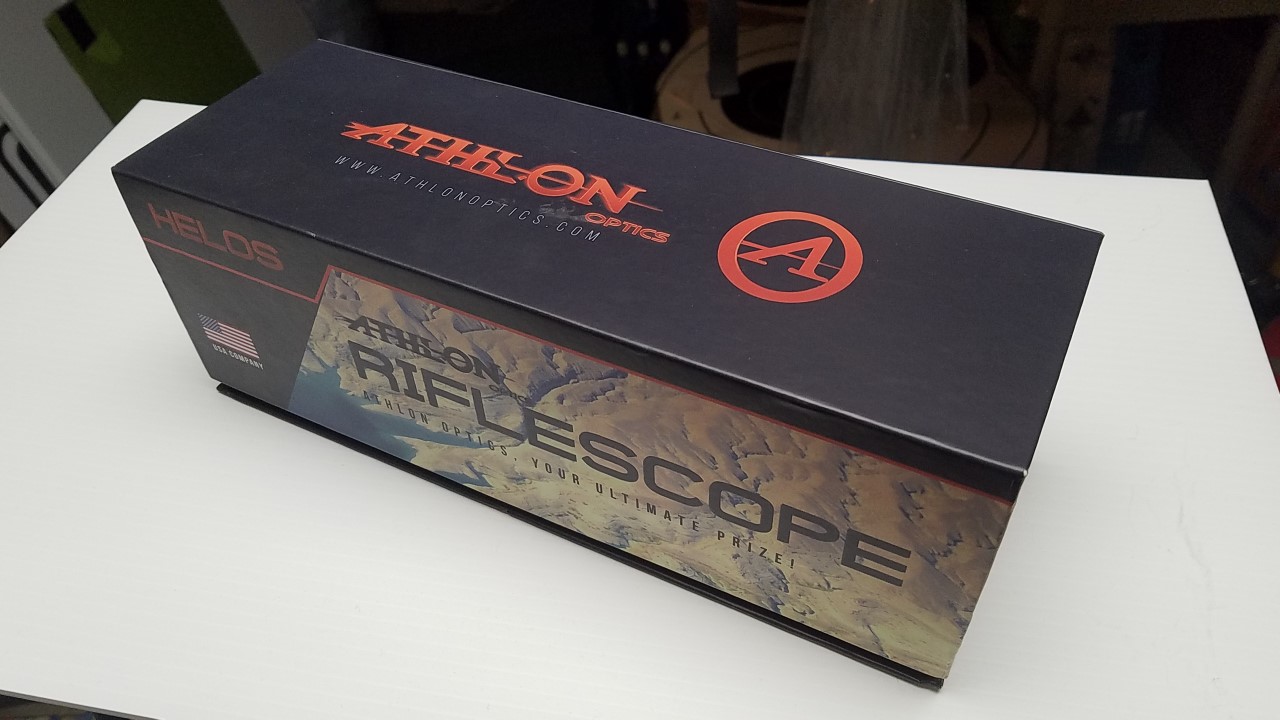
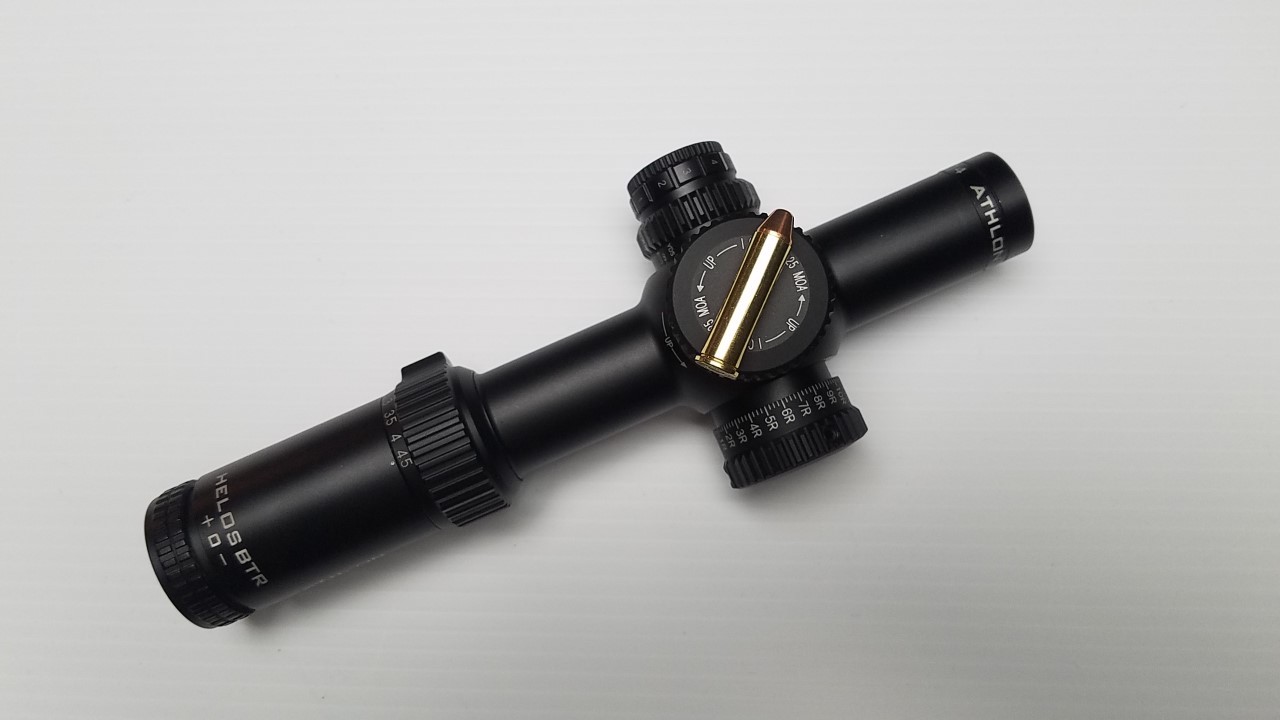
The original Athlon Helos BTR 1–4.5×24 reviewed in 2019
The mistake that started it
For some context, I was still shooting traditional iron sights. Before CMP allowed scopes on AR-15 service rifles in 2016, the standard National Match setup used an A2-style rear aperture sight with small elevation and windage knobs. My match sights moved in quarter-minute clicks, but the knobs were still compact and I had to keep track of where I was. There was no big, easy-to-read “L” or “R” scale staring back at me.
After skipping the previous year at Perry, I was having a hard time getting back into a groove. I shot poorly in the President’s Hundred, then started the National Trophy Individual Match by cross-firing my only offhand ten onto the target next to mine. The wind died down and I still shot out the left in rapid seated and rapid prone. Things were going well.
At 600 yards I thought I had a really good read on the light right-to-left wind. I dialed the little windage knob on my iron rear sight and fired my first shot. It was an eight out the left. I was feeling so confident about my wind call that I decided the eight must have been a flyer and fired again without making a correction. Another eight.
At that point I figured I just sucked at reading the wind and made the correction needed to get into the ten ring. During pit duty I compared notes with another competitor and realized what had actually happened: sometime after offhand, I had lost track of the small iron-sight windage knob and wound up one complete ten-click rotation away from my zero. At a quarter minute per click, that little knob had quietly put me 2.5 minutes off.
After the match I wandered down Commercial Row and handled the Athlon in the White Oak store. Suddenly, those big single-rotation windage and elevation dials were looking very appealing.
A motel-porch bargain
Being a guy on a limited budget, the Athlon was appealing because it was one of the less expensive scopes set up specifically for service rifle. “Appealing” and “probable for me to purchase” are not always the same thing, however.
That night I was back at the motel talking to Jester. As we sat on the porch shooting the breeze—pun intended—I started explaining the scope and some of its features. A guy staying a few doors down overheard us and yelled, “Hey, you want an Athlon scope? I’m trying to sell one.”
After some hard bargaining, I talked him down to exactly $0 below his original asking price and bought his lightly used scope.
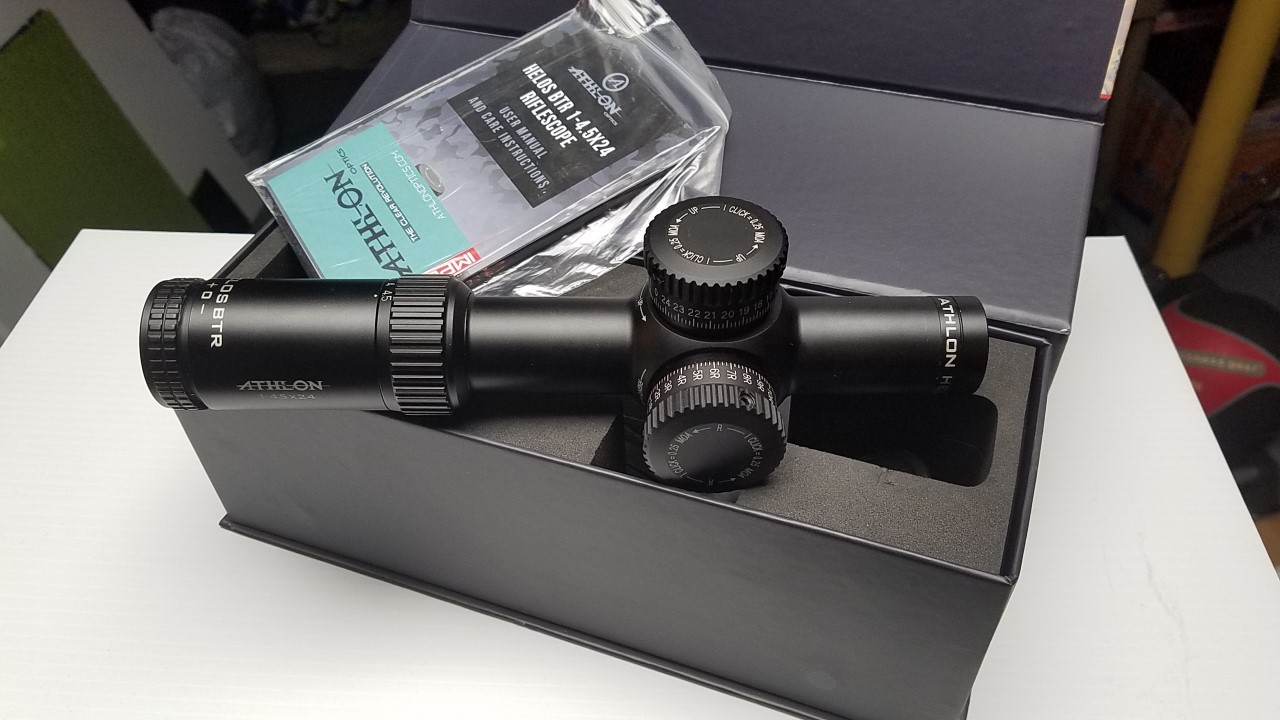
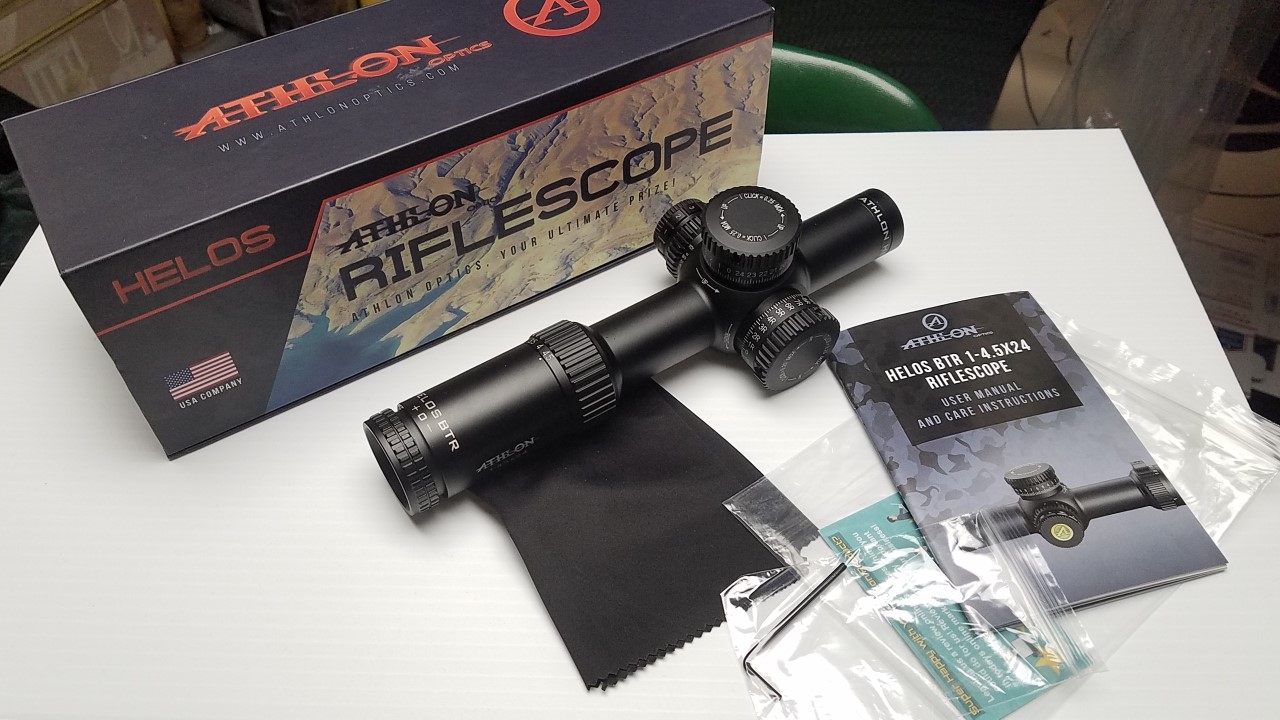
The original retail boxScope, manual, cleaning cloth, battery, and Allen wrench
Unpacking the box
The scope came in a nicely padded box with a manual, cleaning cloth, coin-cell battery, and an Allen wrench for adjusting the turrets. Nothing surprising there.
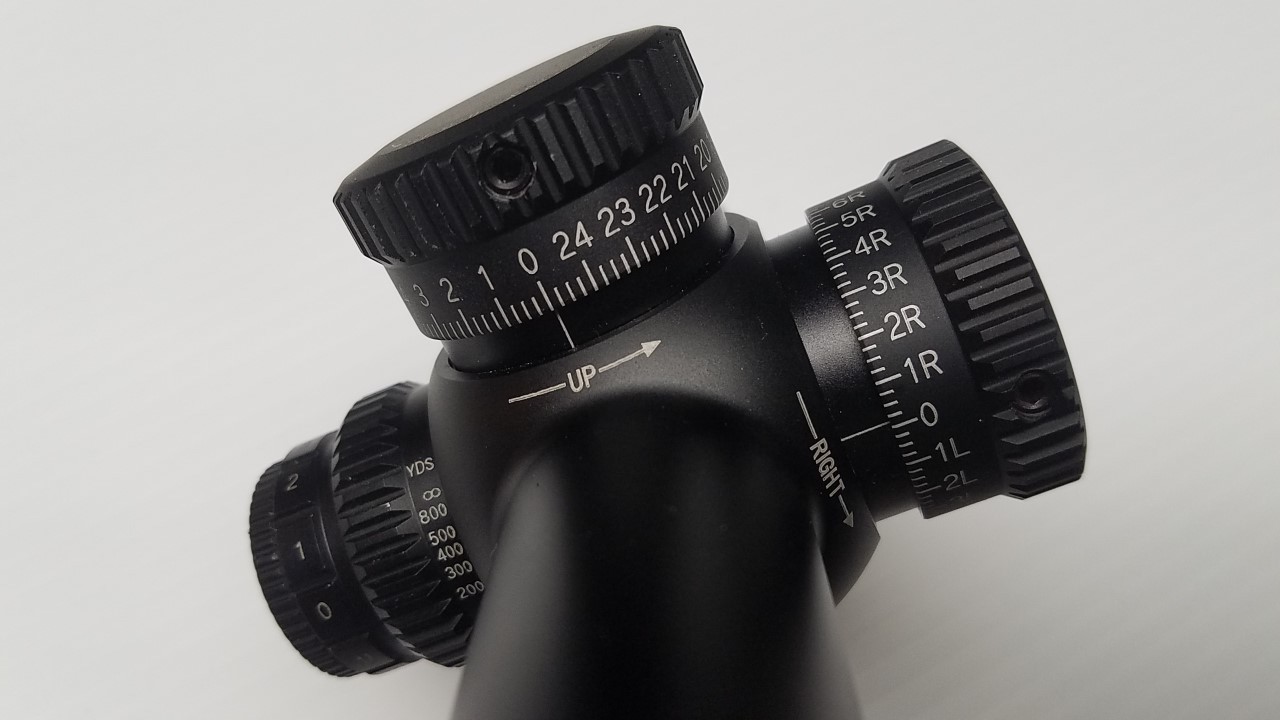
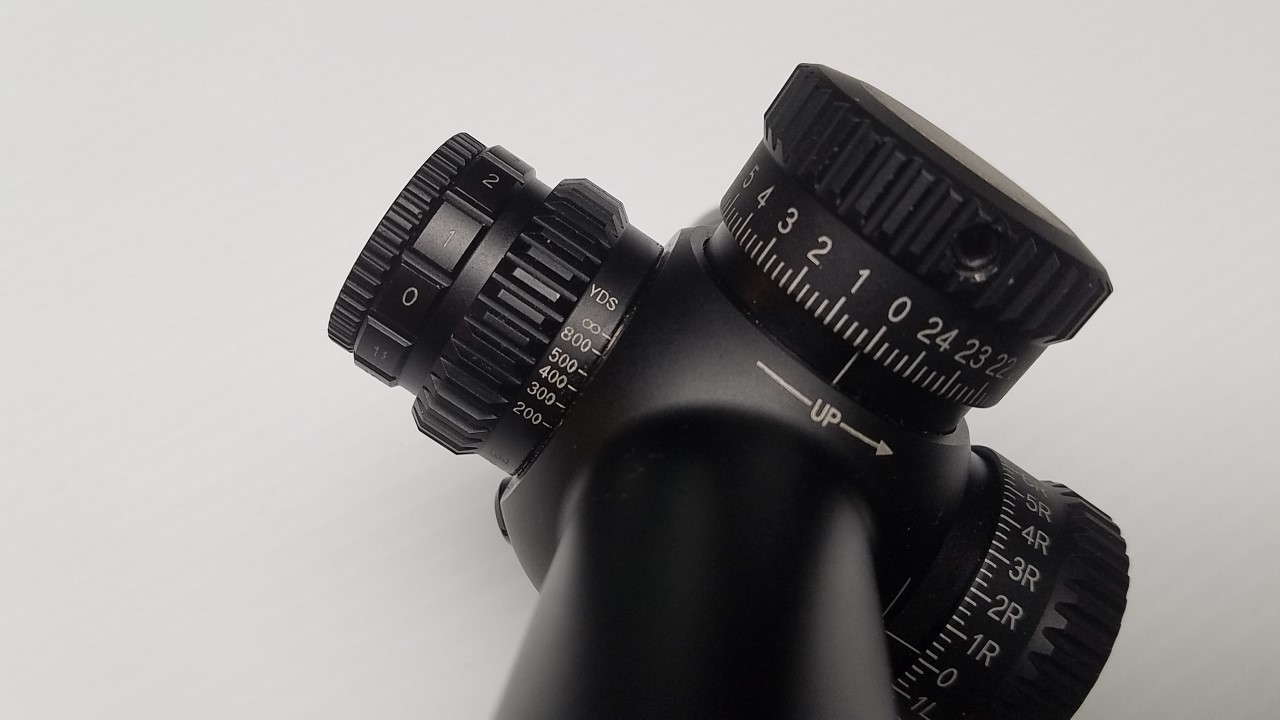
The turrets, on the other hand, were big. The .357 cartridge in the photo should give you an idea of just how big. The quarter-minute clicks were tactile and lined up nicely with the hash marks. The windage numbers were marked “L” and “R,” which seemed like a nice feature for people who occasionally get confused about which direction they are dialing. I had recently heard that could cause problems.
My 2019 notes described 25 minutes of elevation and 12 minutes of windage in each direction on the scope I bought. That was plenty for the 200-to-600-yard National Match course. I hoped to shoot at 1,000 yards someday, but my immediate concern was earning EIC points. Not having an extra elevation rotation to keep track of seemed like an advantage in that quest.
Large, plainly marked turrets were the main selling pointA .357 cartridge gives a sense of the turret size
Parallax, weight, and the reticle
Unlike some of the other service-rifle scopes available at the time, the Athlon had a parallax adjustment. It also had an illuminated reticle, although I doubted I would ever use the illumination in competition. The parallax knob was very stiff. Another competitor with the same scope told me that was normal.
The Helos BTR weighed a beefy 22.9 ounces. Between the optic and its mount, it was going to add weight to my already 17-plus-pound rifle. I like a heavy rifle, so I considered that a feature. My rifle was already a little muzzle-heavy, and I wasn’t especially worried about it.
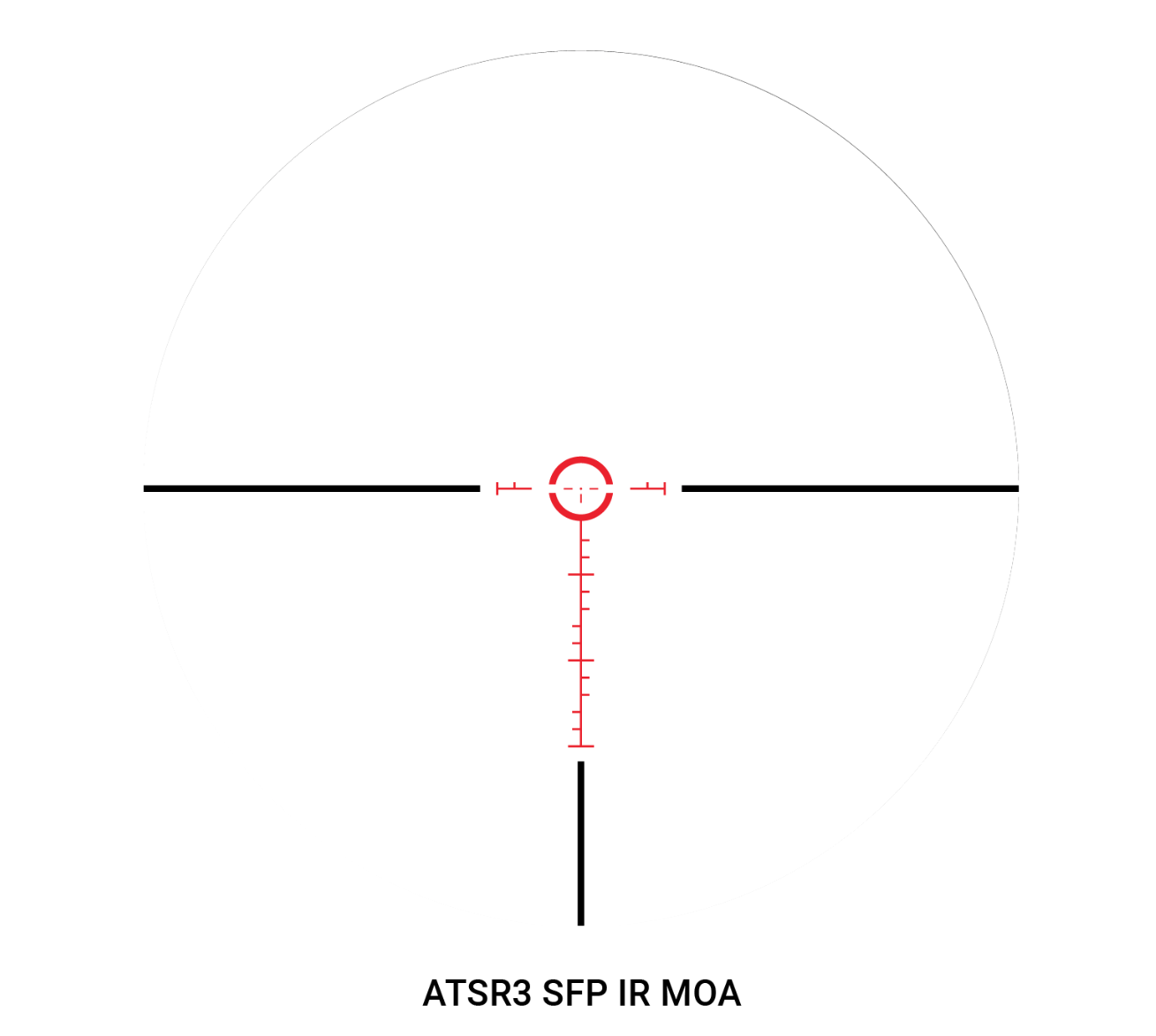
Athlon supplied very detailed information about the ATSR3 reticle. I had no idea how much I would use the holdovers, although they looked potentially useful for Hearst Doubles rapid fire. I clearly had some studying to do.
The center dot was tiny. Really tiny. The shooter who sold me the scope had moved to another optic because his eyes weren’t good enough to see it. I had been shooting irons with contacts to get a good sight picture, and I needed those contacts to see this dot clearly too. Without them, the dot and fine center crosshairs became a blurry mess even after adjusting the eyepiece. That probably said more about my astigmatism and presbyopia than it did about the scope.
The ATSR3 reticle used in the reviewed scopeAdjustable parallax on the Gen1 scope
The field test I didn’t plan
I didn’t fully appreciate the large split ring in the Athlon reticle until I was back at Perry on the 600-yard line and my right contact lens decided to start exploring new and exciting parts of my eye.
My vision took a serious turn for the worse. The center dot and fine hash marks were useless. I told my scorer the contact was AWOL and I could barely see anything. Even the shooter on the firing point next to me heard about the problem and offered his condolences.
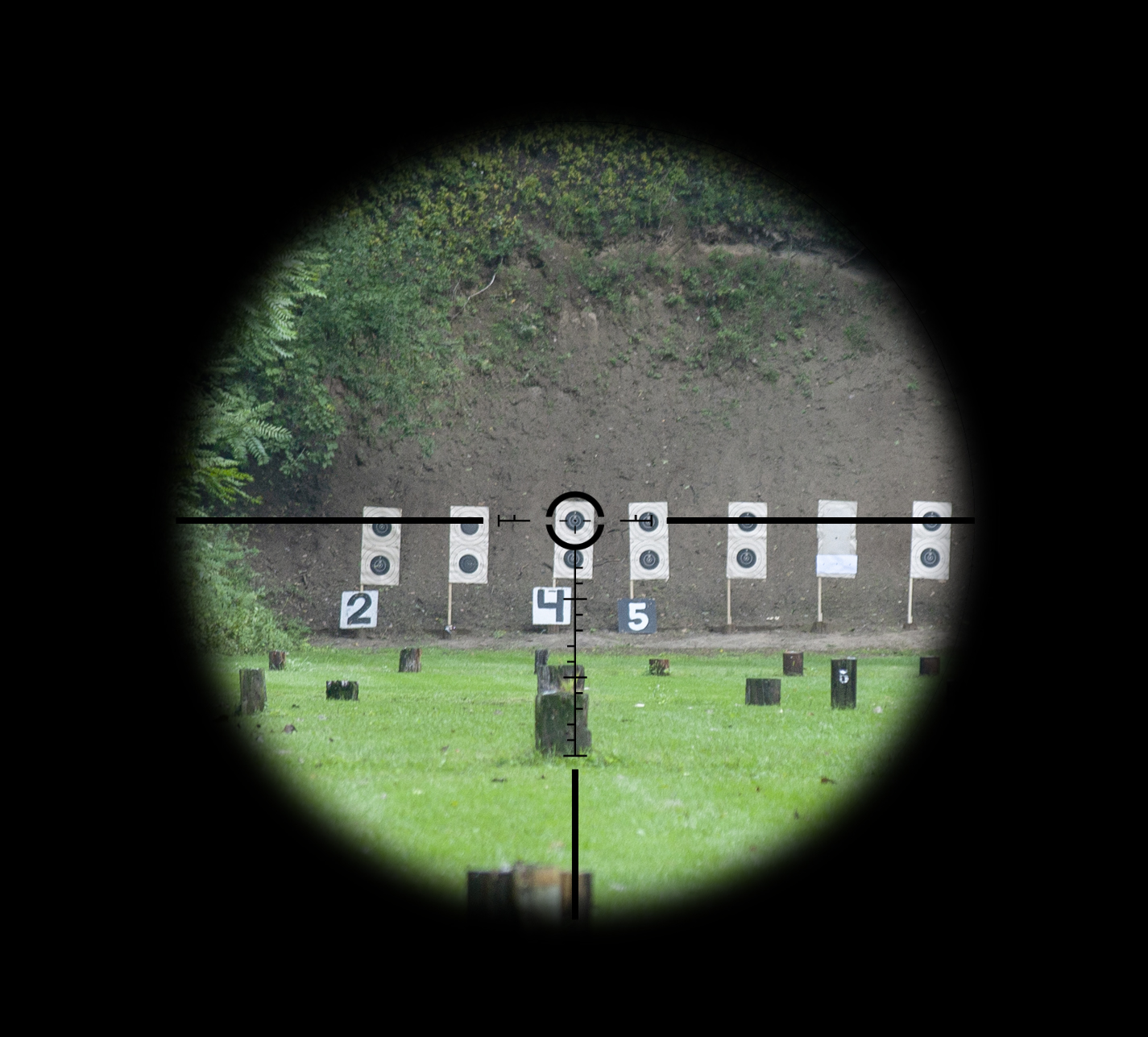
With the clock running and no practical way to recover the contact, I looked through the scope again. The split ring was still clearly visible. My only real option was to use it for a frame hold against the full-sized target backer. I settled into position, lined things up, and hoped the target was centered in the backer.
I fired and saw the target go down. When it came back up, I was a little shocked to see a ten. I told my scorer I was using a frame hold and couldn’t believe it worked. Then I shot another ten.
The guy next to me saw what was happening and said, “Dude, I have no idea what you’re doing, but you need to keep doing it.”
Time was running low, and I put four or five tens in a row on the target using that frame hold. Then the wind shifted and I left the ten ring. Still, I finished the string using a sight picture that definitely had not been part of my plan for the day.
A view through the optic: the outer geometry became an emergency frame hold
Looking back
The original Helos BTR addressed the exact problem that made me interested in a scope: it gave me large, legible controls that made it much easier to see where my windage and elevation were set. It was heavy, the fine center of the reticle demanded corrected vision, and the parallax adjustment was stiff. None of those things kept it from doing what I needed it to do.
The surprise was the split ring. I bought the scope because I wanted turrets that could save me from myself. I ended up appreciating it just as much for a reticle feature that rescued a 600-yard string after my contact lens abandoned the match.
This is my experience with that particular 2019-era Gen1 model, not a review of whatever Athlon currently sells. If you find one on the used market, hopefully this gives you some idea of what it was designed to do—and why it made sense to a service-rifle shooter coming from iron sights.